
Soft Housing, Subdued Labor, and Mixed Trade Trends
By: EBRC Research Staff
Current data as of 9 July 2026
Real home prices continued to decline in April as inflation accelerated. Meanwhile, labor market data show subdued activity at both the local and national levels in May and June. The U.S. trade deficit also widened in May, despite record-high petroleum exports.
U.S. home prices rose 0.8% over the year in April, up from a 0.7% annual increase in the previous month, based on the S&P Cotality Case-Shiller June 30th release. On the other hand, Phoenix home prices fell 1.7% in April, with similar declines also reported in Denver (-1.8%), Tampa (-1.8%), and Dallas (-1.6%). Chicago again reported the highest annual gain among the 20-city composite with a 6.5% increase in April, followed by New York and Cleveland with increases of 3.8% and 3.2%, respectively. Seattle posted the steepest drop in prices, with a 2.3% decline over the year. For the eleventh consecutive month, inflation outpaced national home price appreciation, extending real home price declines. – Niaoniao You
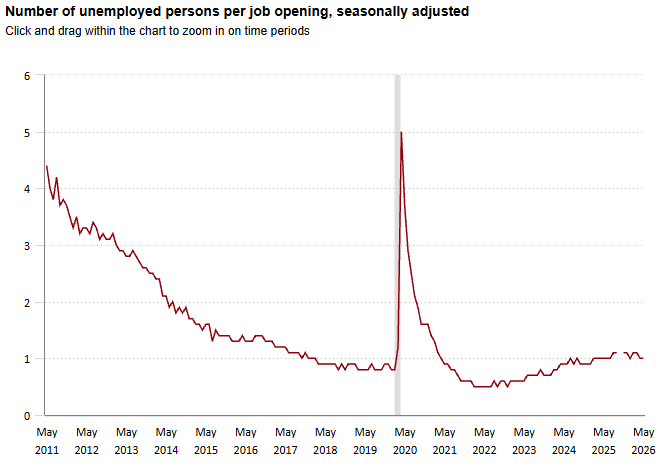
The number and rate of job openings in the U.S. were unchanged in May at 7.6 million and 4.6%, respectively. Hires were similarly unchanged for the month at 5.2 million and 3.3%, according to the June 30 U.S. Bureau of Labor Statistics Job Openings and Labor Turnover Survey (JOLTS) release. The total number of separations in May was 5.1 million, compared with 5.0 million in April, with all industries showing little change. Within separations, quits changed little, though they increased in the federal government (+4,000), and layoffs and discharges decreased in arts, entertainment, and recreation (-42,000), yet were unchanged overall. –Valorie Rice
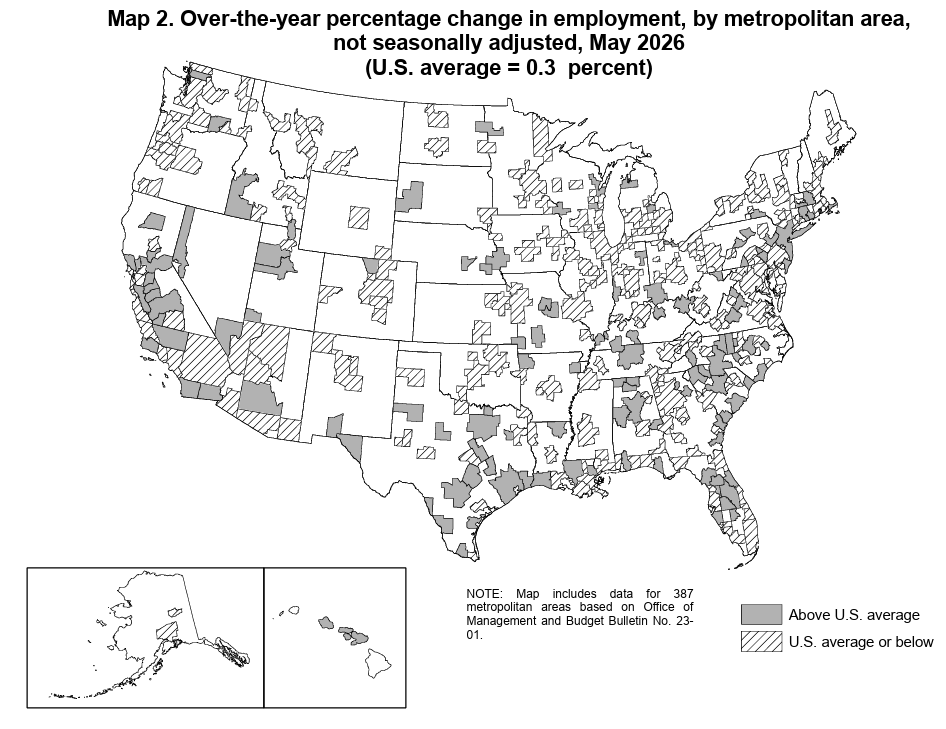
In May, year-over-year metropolitan unemployment rates were higher in 191 of the 387 metropolitan areas, lower in 164 areas, and unchanged in the remaining 32. The unemployment rates for the Tucson and Phoenix metropolitan areas came in at 4.7% and 3.1%, respectively. Yuma had the highest unemployment rate in Arizona at 16.0%, also the largest over-the-year rate increase (+1.8 percentage points) nationally. Bismarck, ND, and Sioux Falls, SD-MN, had the lowest unemployment rates for the month at 1.8%, while El Centro, CA, had the highest unemployment rate at 16.9%. Over the year, nonfarm payrolls increased by 23,600 in hoenix and by 100 in Tucson, while other metro areas in Arizona saw slight decreases. Please see our previous article for more details on Phoenix, Tucson, and Prescott MSA employment. – Niaoniao You
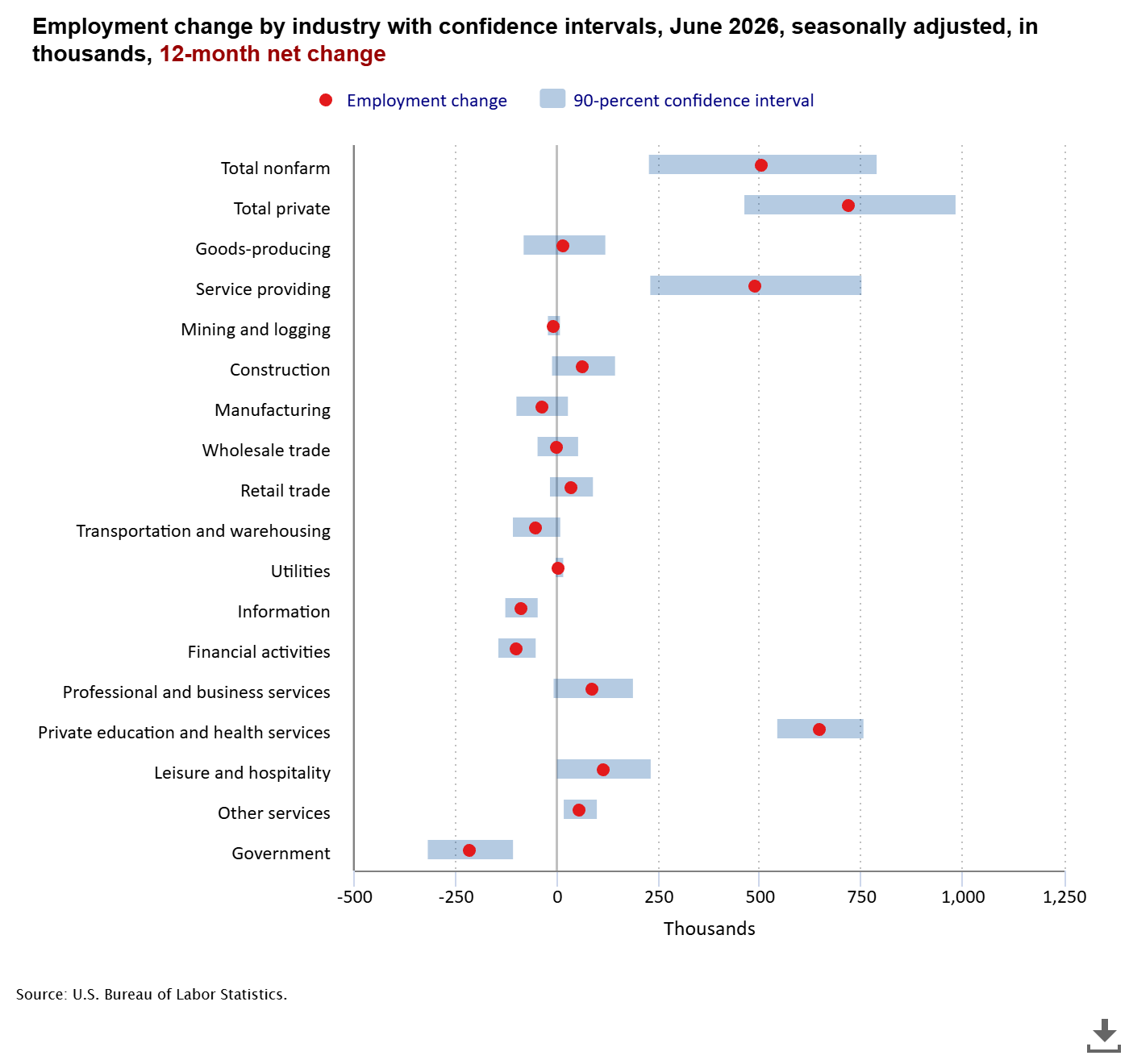
The U.S. unemployment rate fell to 4.2% in June, with total nonfarm payroll rising by 57,000, according to the Bureau of Labor Statistics’ July 3rd employment situation summary. Labor force participation rate decreased by 0.3 percentage points to 61.5%, and the employment-population ratio slid by 0.2 percentage points to 59.0%. The unemployment rates for major worker groups showed little or no change, and the number of long-term unemployed (those jobless for 27 weeks or more) changed little over the month at 1.9 million but is up by 286,000 over the year. Payroll employment rose by 36,000 in Professional and Business Services over the month, 25,000 in Social Assistance, and 22,000 in Health Care. Leisure and hospitality employment declined by 61,000, showing weaker-than-usual seasonal hiring. – Niaoniao You
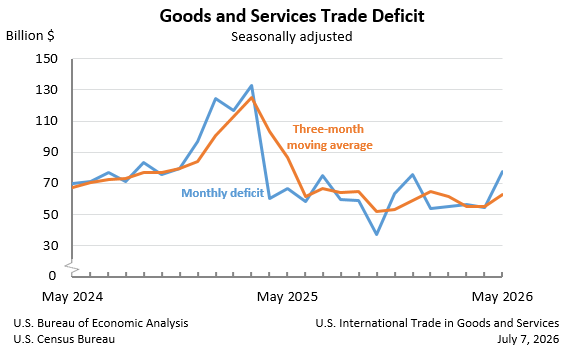
The U.S. trade deficit came in at $77.6 billion in May, up from a downwardly revised April figure of $54.6 billion. Imports were up by $12.5 billion over the month while exports fell by $10.5 billion. The three-month moving average ending in May for the goods and services trade deficit was $62.9 billion. Year-to-date, the goods and services deficit reflected a 40.6% drop compared to the same period last year. May petroleum exports ($38.4 billion), and their real value ($20.2 billion, chained 2017 dollars) were the highest on record. The countries the U.S. ran the highest surpluses within April were, in billions of dollars, Netherlands ($9.1), Hong Kong ($5.6), and South and Central America ($4.8). The highest deficits for trade were with Vietnam ($20.6), Mexico ($20.1), Taiwan ($19.4), and China ($14.5). –Niaoniao You